

Acrylic Basketball Court Surfaces: Application, Maintenance & Systems
Acrylic basketball court surfaces are 100% acrylic latex-based coatings fortified with graded silica sand to provide uniform traction, consistent ball bounce, and long-term protection for outdoor athletic pavement. Designed specifically for asphalt and concrete substrates, these textured color coating systems withstand extreme weather, resist UV fading, and prevent slip-and-fall injuries without creating an abrasive, skin-damaging texture.
Whether surfacing a backyard half-court, a commercial park facility, or a high school multi-sport court, acrylic sport coatings provide a durable, non-porous playing surface that seals the pavement against water intrusion and environmental breakdown.
Why 100% Acrylic Systems Are the Industry Standard
Untreated asphalt and bare concrete break down rapidly when exposed to rain, freeze-thaw cycles, and solar oxidation. Uncoated pavements also lack the surface texture required for athletic pivoting movements and ball response. Acrylic basketball court systems solve these issues through engineered layer design:
- Controlled Athletic Traction: Fortified with rounded silica sand, acrylic color systems deliver dependable wet and dry grip for pivots, cuts, and deceleration without being overly abrasive to shoes or skin.
- UV & Weather Resistance: High-grade acrylic resins utilize non-fading inorganic pigments that maintain deep, vibrant court colors under continuous sunlight.
- Moisture Protection: The continuous acrylic film seals pavement pores, preventing surface water from penetrating the substrate and causing structural raveling or freeze-thaw spalling.
- Thermal Shock Tolerance: Formulated to remain flexible through hot summers and freezing winters, expanding and contracting with the underlying base without delaminating.
- Resurfacing Lifecycle: A properly applied 100% acrylic surface lasts 5 to 8 years before requiring a maintenance resurface.
System Layer Build: How Acrylic Courts Are Structured
A standard athletic court surface requires a multi-coat application to achieve the correct film thickness, proper traction, and durability.
1. Substrate Preparation & Patching
Before coating application, the pavement must be clean, structurally sound, and properly cured:
- Asphalt: Must cure for a minimum of 14 to 30 days so volatile oils oxidize and evaporate.
- Concrete: Must receive a medium-broom finish and cure for 28 days. Smooth or power-troweled concrete must be shot blasted to open the pores, followed by an acid etch to neutralize the surface PH. Next, apply acrylic adhesion promoter to prime the new concrete surface. Concrete slabs require an intact vapor barrier underneath to prevent hydrostatic moisture blisters.
- Crack & Low-Spot Repair: Pavement depressions holding water deeper than a nickel (1/16 inch) after 1 hour of drying, must be leveled using an acrylic patch binder mix before overall resurfacing begins.
2. Acrylic Resurfacer (Base Coat)
One to two coats of black or neutral Acrylic Resurfacer, mixed with clean 50–60 mesh angular silica sand and water, are applied across the entire court. The resurfacer fills minor voids, levels asphalt aggregate texture, and establishes a uniform foundation for the decorative color coats.
3. Fortified Acrylic Color Coats
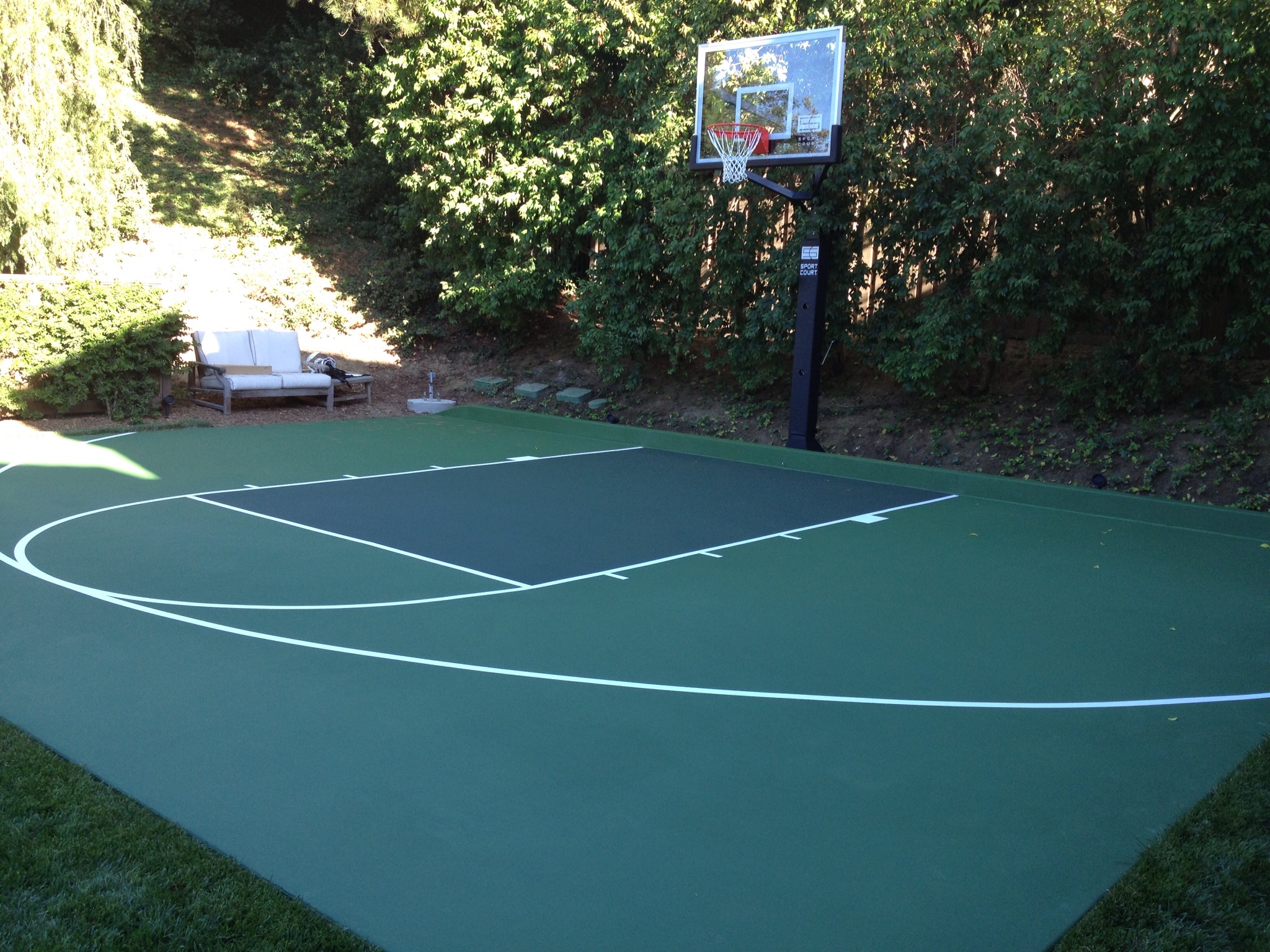
Two coats of factory-textured or site-mixed acrylic color coatings are applied using a professional sport squeegee. The fine, uniform silica sand in these coats sets the final surface thickness and athletic grip. Popular court palettes feature two-tone combinations (e.g., Light Green perimeter with a Blue playing area, or Light Blue with a Darker Blue key).
4. Precision Game Line Painting
Lines must be laid out according to standard regulation dimensions (High School, NCAA, NBA or custom half-court dimensions) using a quality masking tape. To prevent paint bleed, lines are sealed with a clear line-primer coat before applying two coats of textured 100% acrylic line paint.
Cushioned Basketball Court Options
For commercial facilities, high schools, or homeowners seeking joint-impact relief, acrylic surfaces can be enhanced with a cushioned rubber sub-layer system.
- Application Process: Applied directly over the acrylic resurfacer base coat, installers squeegee down multiple layers of elastomeric acrylic filled with graded recycled SBR rubber granules.
- Layering Structure: Coarse rubber granules are applied first to build thickness and impact absorption, followed by fine rubber granules to smooth the texture.
- Benefits: Reduces shock on knees, ankles, and lower backs during aggressive play while maintaining standard ball bounce and court traction.
Dual-Purpose Basketball & Pickleball Combo Courts
One of the most cost-effective ways to maximize athletic pavement is configuring a combination court. A standard 30′ x 60′ or 44′ x 20′ area easily accommodates both sports on a single slab:
- Primary Lines: Basketball boundary lines and keys are painted in a high-contrast standard color (typically bright white).
- Secondary Lines: Pickleball non-volley zone and perimeter lines are painted in a complementary blended tone (such as light blue, soft yellow, or gray) that remains visible during pickleball play without distracting basketball shooters.
- Maximized Utility: Allows residential backyards, schools, and parks to serve two fast-growing sports without building separate paved pads.

Application Requirements & Best Practices
Applying acrylic sports coatings requires professional application techniques to avoid streaks, uneven sand suspension, and premature failure:
- Temperature Threshold: Ambient and surface temperatures must be at least 50°F (10°C) and rising during application and for at least 24 hours afterward. Do not apply if rain is forecast within 24 hours.
- Application Tool: Always apply materials using a 50–60 durometer flexible rubber sport squeegee. Rollers and paint sprayers do not properly seat the sand aggregate into the surface profile.
- Mix Ratios: Maintain exact water dilution and sand loading ratios per manufacturer specifications. Adding excess water breaks down the acrylic binders and causes premature wear patterns at the free-throw line and key.
Frequently Asked Questions
How often does an acrylic basketball court need resurfacing?
Outdoor acrylic basketball courts typically require resurfacing every 5 to 8 years, depending on frequency of use, seasonal climate swings, and routine maintenance. Pressure washing periodically and keeping the court clear of organic debris extends the coating’s lifespan.
Can acrylic court paint be applied over existing paint?
Yes, provided the existing coating is an athletic-grade 100% acrylic system that is tightly bonded to the pavement. Oil-based paints, alkyd sealers, or flaking layers must be mechanically removed via pressure washing, grinding, or shot-blasting before applying new acrylic coatings.
Why do bubbles or blisters appear on coated concrete courts?
Blistering almost always stems from hydrostatic water vapor pressure rising from the ground beneath the concrete slab. If an adequate 6-mil or 10-mil vapor barrier was not installed beneath the slab during concrete placement, ground moisture pushes through the concrete capillaries and pops the acrylic film off the surface.