Tag Archives: acrylic coatings

What type of silica sand should be used in acrylic sport surfaces?

When sourcing sand for use in 100% acrylic sport coatings, it’s important to use quality sand.  There is a large variety of sand characteristics when sourcing throughout the United States & around the world.  Here are some important factors when researching sand for acrylic sport surfaces:

  • For acrylic color coatings, shoot for a sieve size of 70-90 mesh.  The higher the number, the finer the sand particle.
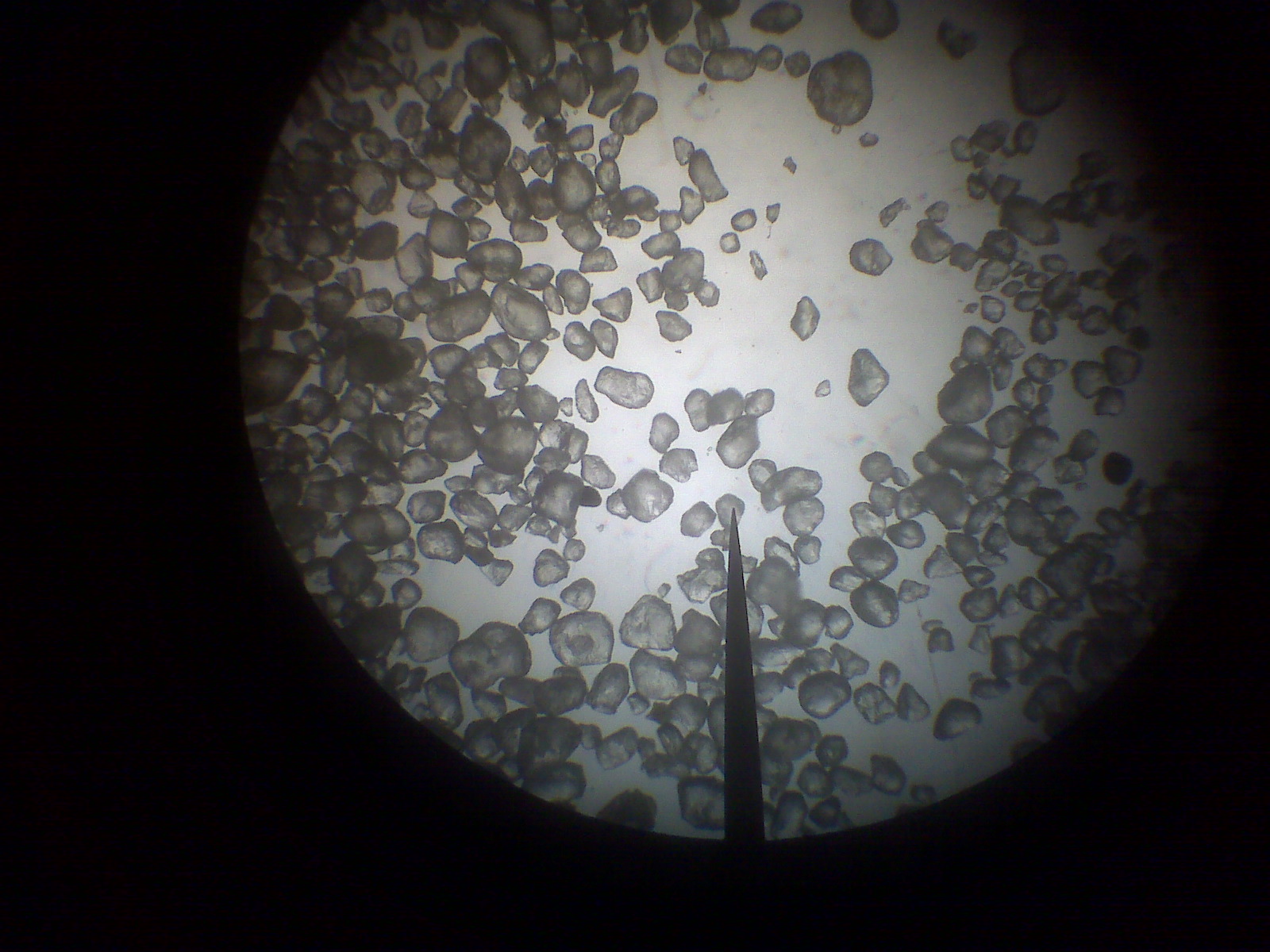
Round Silica Sand | 90 Mesh for Colored Tennis Court Surfaces
  • The ideal shape for color coating sand is round.  Angular sand can be used for a grittier texture, but it can also increase wear on the pickleball or slower play with tennis balls.  Angular sand can increase wear on pickleballs and create more ball fuzz with tennis balls.  Angular sand can also result in more visible application, or squeegee marks.
  • Since the standard method of coating application is a soft rubber squeegee, the size of the sand sets the coating thickness.  The larger the sand, the thicker the coating.  This also affects the coverage rate.  More coating is used with larger sand and less with finer sand.
  • Look for sands with low-to-no dust.  Dust in sand can lead to less vibrance and more chalky appearance of the color coatings.  It can also diminish the UV resistance of the color and lead to earlier fading of the finish.  When looking as a sand sieve analysis, look for low percentages in the “Pan”.  The pan holds fines that fall through all of the sieve “screens” and lands in the pan at the bottom.

Are finer and coarser sands acceptable for use in color coatings?

When looking at a sand sieve analysis, there is never 100% of a certain size in any lot of sand.  There is a range of particle sizes in various percentages within all sands.  Most technical data sheets for sand will include the sieve analysis, and some of them will provide the average (or AFS).  So if a specification calls for 100 mesh sand, it would be acceptable to use something close like a 80 to 90 mesh sand since it likely has particles within the mix that are over and under this range.

What is the best type of sand to use in Acrylic Resurfacer?

Acrylic Resurfacer is an industry-standard product that is used as the base coat(s) under colored acrylic playing surfaces.  Acrylic Resurfacer is used for the following:

  • Filler coat.  Fills voids in asphalt or concrete pavement surfaces.
  • Helps to hide crack repairs, low spot leveling and other surface repairs
  • Provides texture on an existing smooth acrylic surface to prepare for consistent application of new textured color coatings.  This helps to ensure the proper mil thickness of the color coatings, which leads to longer wear and superior hiding.
  • Excellent primer coat for adhesion of the surfacing system.

The size and shape of the silica sand used in acrylic resurfacer is directly attributed to the performance.   Thus, it is recommended to use a larger & angular shaped silica sand somewhere between 40 to 60 mesh (clean and dust-free).  This helps to create a thicker hiding coat which is also perfect for filling voids in pavement.  If a finer sand is used in Acrylic Resurfacer, the filling and hiding capacity is greatly diminished.
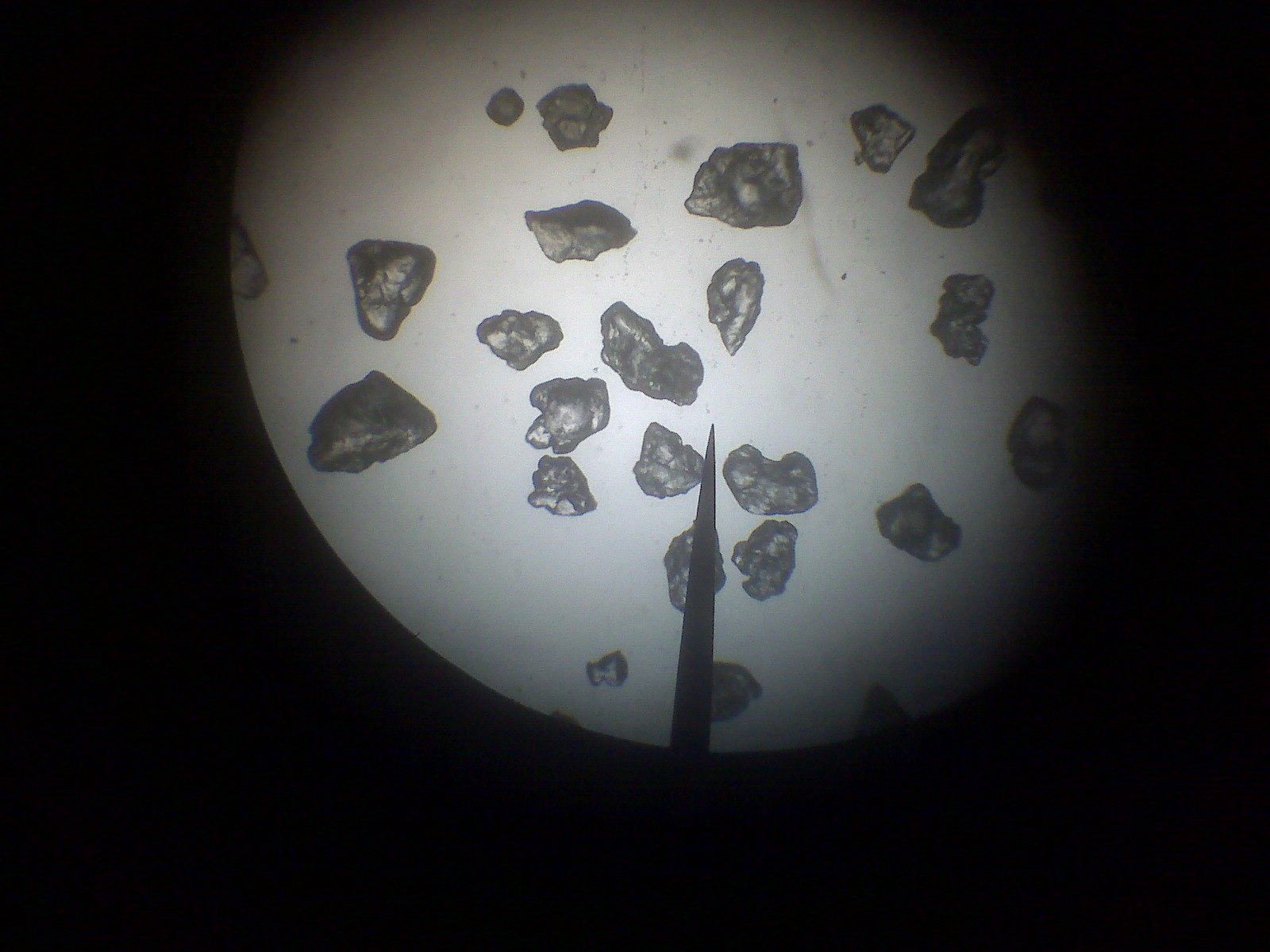
Angular Silica Sand | 50 Mesh for Acrylic Patch Binder and Resurfacer

Recommended sand for Acrylic Patch Binder

Acrylic Patch Binder is another common repair product that is used on acrylic courts.  Patch Binder is a 100% binder that is mixed on-site with portland or hydraulic cement, and silica sand.  It is used to fill and level birdbaths, or low areas where water puddles on a court surface.  Patch Binder mix is also used to fill cracks on asphalt and concrete athletic courts.  Since we want to fill low spots and cracks, it is ideal to also use a 40 to 60 mesh angular silica sand.  This should be the same type of sand that is used in Acrylic Resurfacer.

Summary of Sand for acrylic sport surfacing systems

The correct sand shape and size is very important, when sourcing for acrylic sport surfacing systems.  Contact your local SportMaster representative for more information & the best sources of silica sands.  If you’re having trouble finding a good local source, you may want to consider buying factory-mixed coatings.  SportMaster produces Acrylic Resurfacer and Color Coatings in both non-textured and factory-textured options.

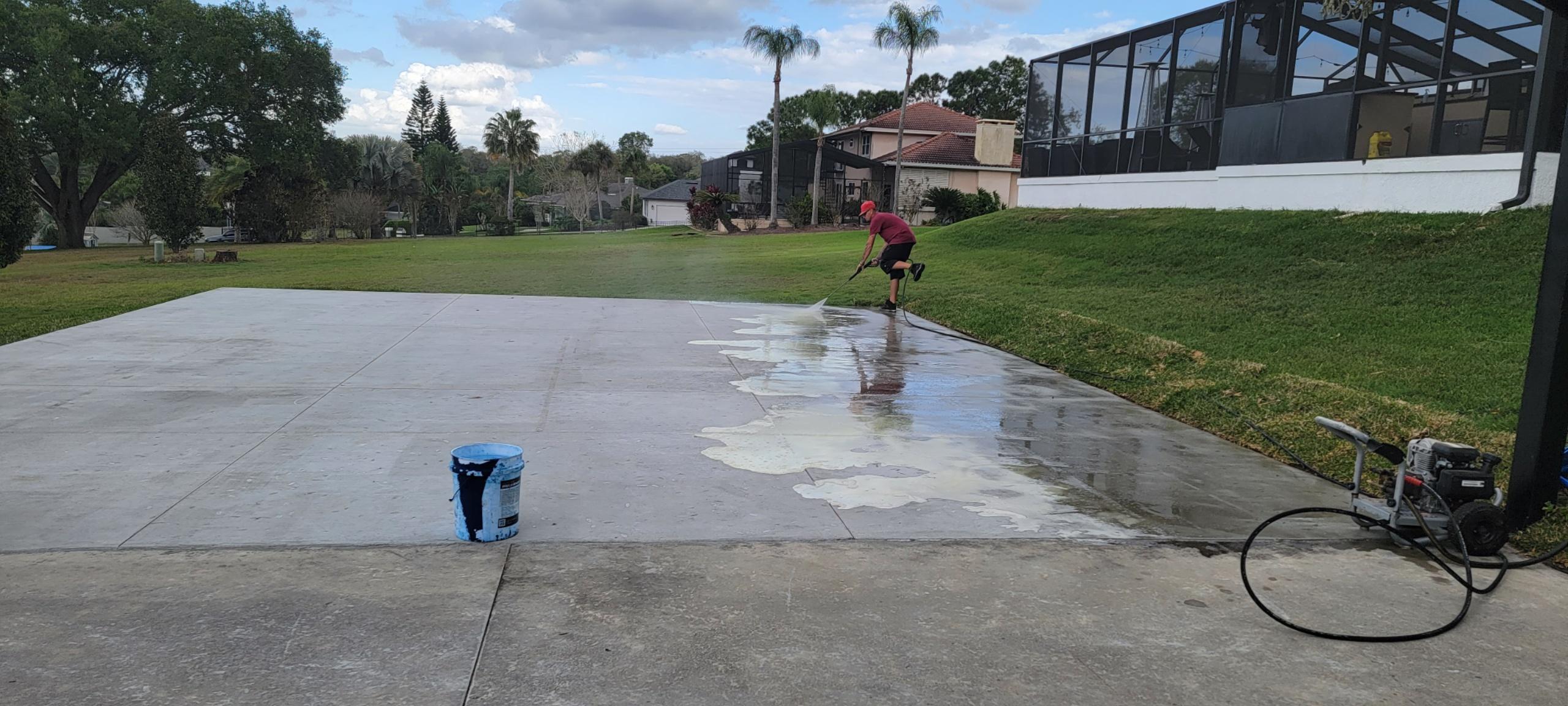
Do Concrete Pickleball Courts Need Saw Cuts or Expansion Joints?

With the high volume of concrete pickleball courts being built, the common question “Do concrete pickleball courts need saw cuts or expansion joints” comes up frequently.

The short answer is “maybe”.

Joints Concrete Pickleball Court

Saw Cuts & Expansion Joints | Pickleball Courts

The American Sports Builders Association provides up-to-date construction guidelines for sport surfaces in the US and abroad.  In conjunction with USA Pickleball, the governing body of pickleball, ASBA created a book with pickleball court standards.  This book is utilized by architects, engineers and other pickleball courts specification writers.

Currently, the recommended substrates for pickleball courts are asphalt & post-tensioned concrete.  Post-tensioned concrete slabs are supported by a grid of steel tendons in a protective sheath that are tensioned after the concrete is placed.  These slabs are considered crack-resistant due to the support of the tensioned cables and do not need saw cuts or expansion joints.

Expansion Joints Pickleball Court

Why are saw cuts & expansion joints placed in concrete?

Concrete is a very hard substrate, and it’s very important that the sub-base is properly laid, sloped for drainage & compacted.  Another popular concrete construction method is reinforced concrete.  Reinforced concrete slabs contain rebar, or steel reinforced bars that lend extra strength within the concrete slab.  For most applications, like driveways, saw cuts are placed after the concrete is formed to control cracking.  However, once the saw cuts are placed, you always have a cut through the slab that will open and close during expansion and contraction from temperature swings.  The saw cuts are straight and consistent, to minimize random cracking in varying directions.

Saw Cuts Pickleball Court

Pickleball & Athletic Courts on Reinforced Concrete

Previous specifications through the ASBA mentioned use of reinforced concrete for tennis courts.  Tennis Courts are 60′ x 120′ and the recommendations were to place saw cuts under the net line and between adjacent courts.  This prevented cuts in the playing areas and potential vertical displacement, or trip hazards, for the players.  Based on the tennis court saw cut recommendations, you basically had two 60′ x 60′ slabs with no saw cuts on each side of the net.  Pickleball courts are usually 30′ x 60′, so many people choose to only put a saw cut under the net line to avoid visible cracks and potential heaving of the slabs between joints.

Acrylic Crack Filler | Uses and Longevity

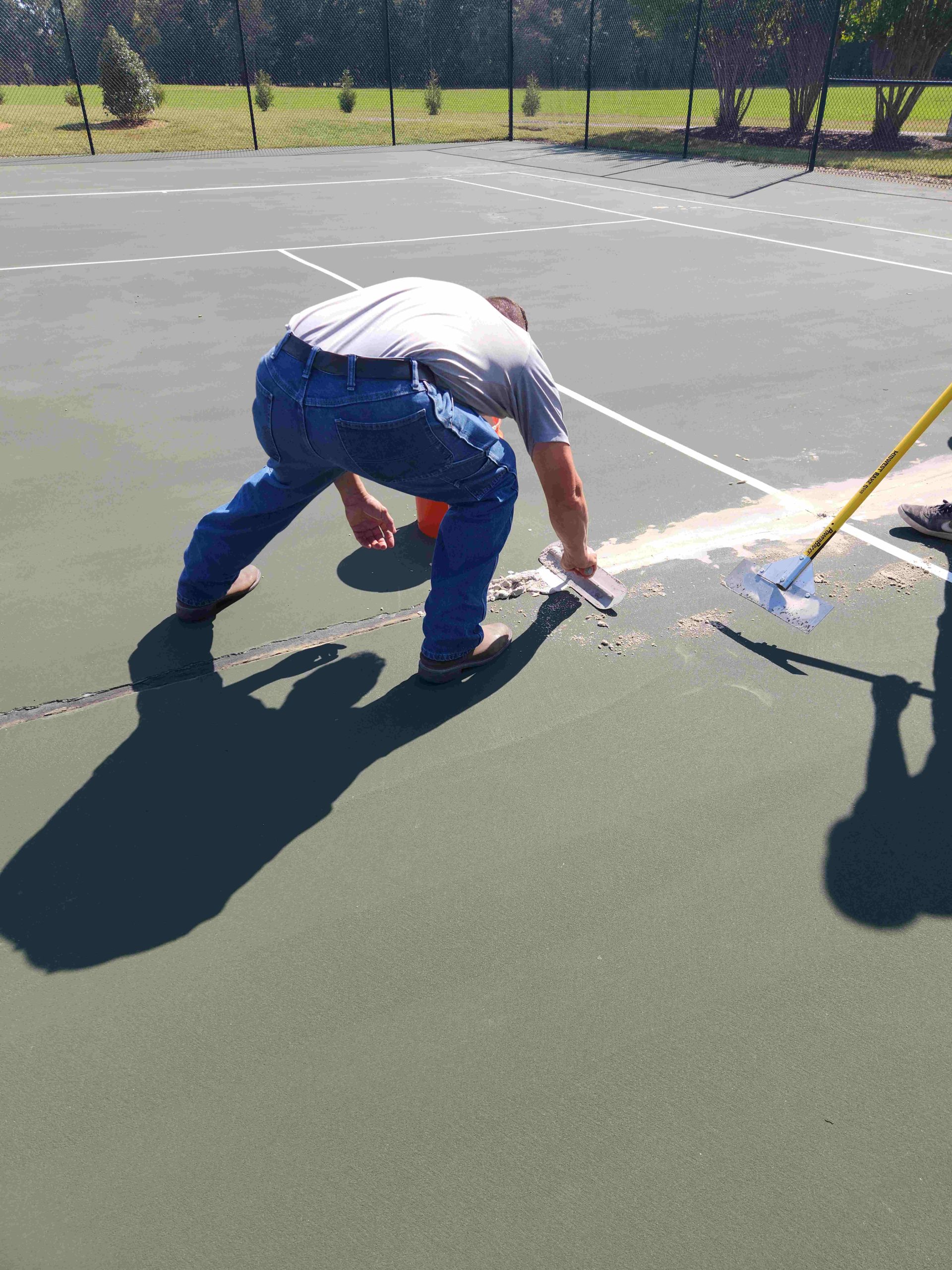
Acrylic crack fillers are usually applied before application of court coatings to fill the saw cuts.  This helps to keep the coatings from puddling in the joints and maintain a cleaner look.  However, movement in the joints will cause a hairline crack to appear, which will gradually widen.  Some joints will reopen quickly and others may take longer to appear, depending on the amount of movement and moisture under the court.  Crack fillers can be reapplied as needed, to minimize moisture intrusion, but this is a continuing maintenance cycle.  The saw cuts/expansion joints are doing their intended job by allowing movement to minimize stress on the rest of the slab.

Saw Cut Crack Filling Pickleball

Flexible and Elastomeric crack fillers

There are also flexible elastomeric fillers that can be used in saw cuts and expansion joints.  These products have better elongation in the cracks, but they can also lead to other issues.  In some cases, the flexible fillers can be pushed upwards when the slabs come back together, leaving a small hump that sticks up above the joints.  This is not ideal for safe footing and consistent ball bounce.  They can also slump when the slabs move apart, leaving a small valley in the saw cuts.  For these reasons, many opt for the harder sand and cement filled acrylic crack sealants.  These situations are solely dependent on the construction of the court and weather variables.  Indoor courts are usually more consistent due to indoor temperature control and the saw cuts usually exhibit less movement than outdoor slabs.

Can I Avoid Seeing Saw Cuts on my Pickleball Court?

Here are some of the best ways to avoid seeing saw cuts on your pickleball court:

  • Management by construction methods
    • Post-tensioned concrete or asphalt construction
    • Minimizing saw cuts by strategic placement (under the net line and out of playing area)
    • Crack fillers (temporary methods and reapplication)
      • Note* reapplying crack fillers will likely leave unsightly shade differences over the cracks.

Remember, saw cuts are uniform and are designed to prevent breakage and cracking throughout the slab.  If the cracks open, they are preventing additional damage to the slab and other random cracks.  Asphalt courts are a bit more flexible, but the asphalt binders will also become brittle with age and will become more susceptible to cracking and settling.  Compaction, drainage and overall construction is also important to longevity of asphalt courts.